
WALKING SAFARIS KENYA
Silence. Space.
And the luxury of going slowly.
Some places reveal themselves only on foot.
WALKING SAFARIS KENYA
On foot, the way
it has always been.
Long before this was called a walking safari, this was simply how the land was known. It was crossed on foot, generation after generation, by people who could read water, weather and the movement of herds in ways that took a lifetime to learn.
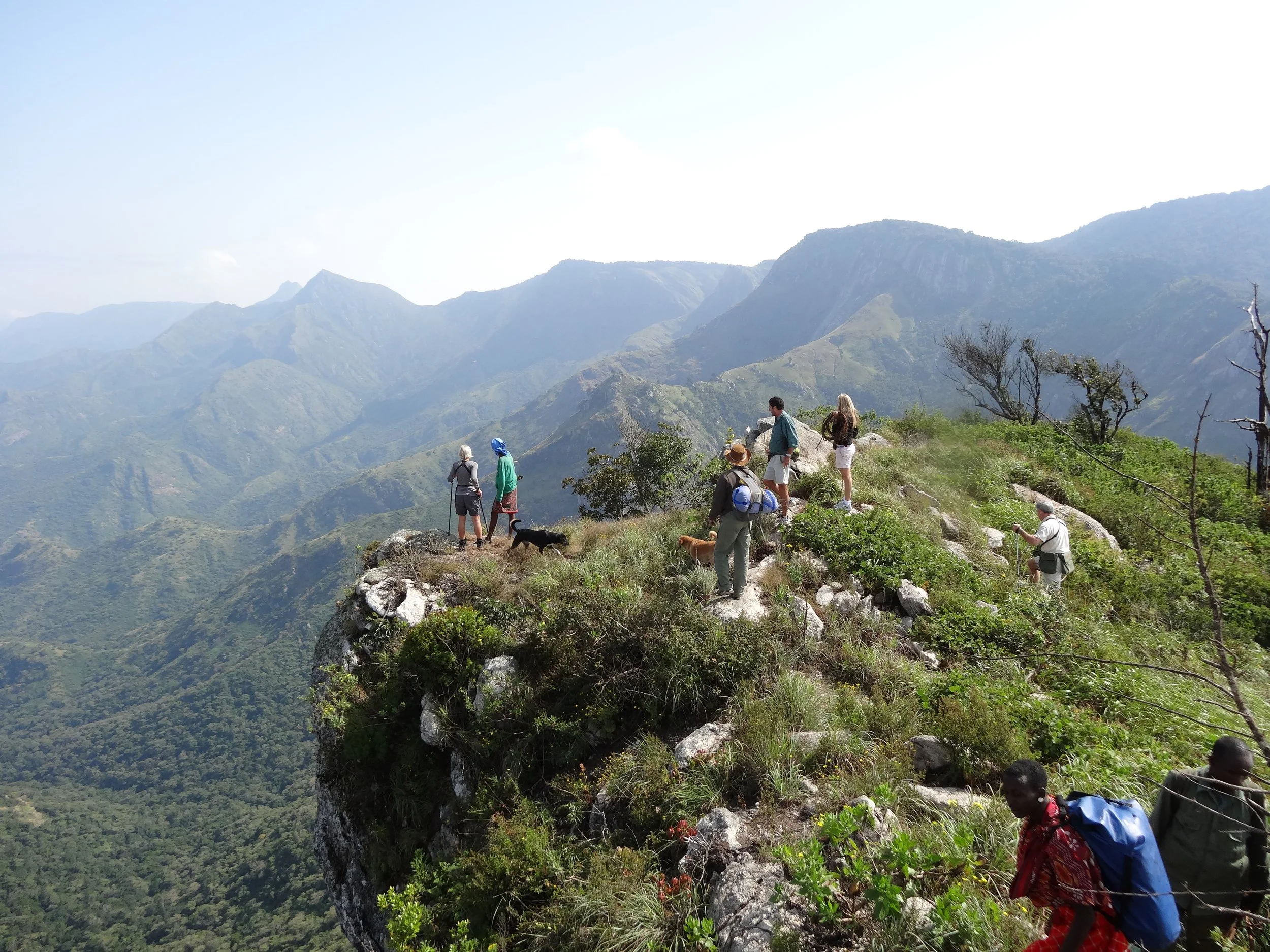
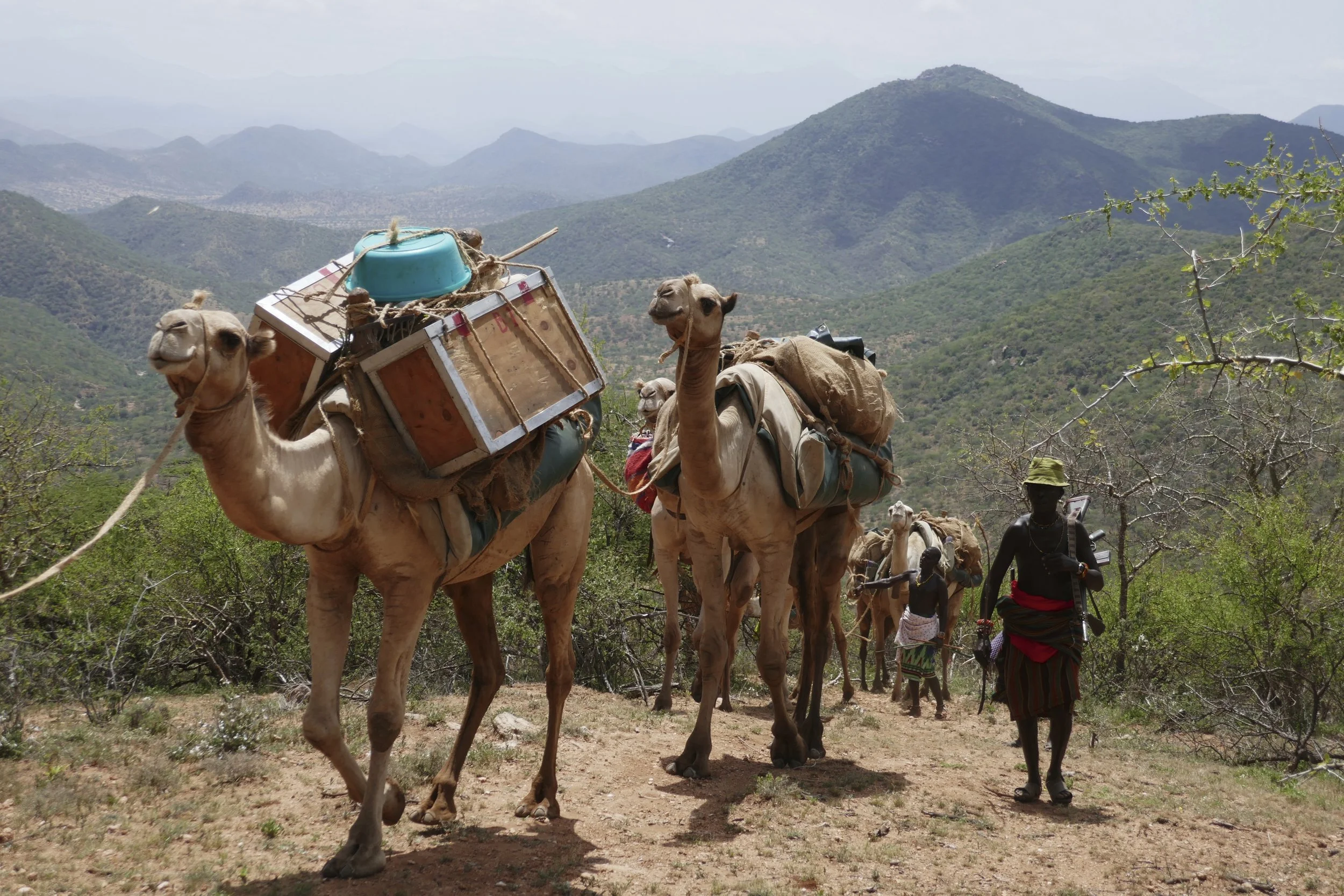
The routes through northern Kenya still carry that knowledge. The Ndoto and Matthews ranges. The dry riverbeds of the Milgis Lugga. The open country stretching towards Lake Turkana. To travel here on foot for days at a time, with camp and supplies carried by camel, is to move through that living history rather than pass over it. There is nothing between you and the landscape except the work of putting one foot in front of the other.
Our walking safaris are guided by people who have spent their lives on this land. Their understanding of the country - its wildlife, seasons, stories and hidden places - shapes every journey. Each safari is private to your group and crafted around the experience you are looking for, whether that is quiet observation, photography, adventure or simply the rare opportunity to spend time in one of Africa's last great wildernesses.
WHERE WE WALK KENYA
Northern frontier.
Unlike anywhere else.
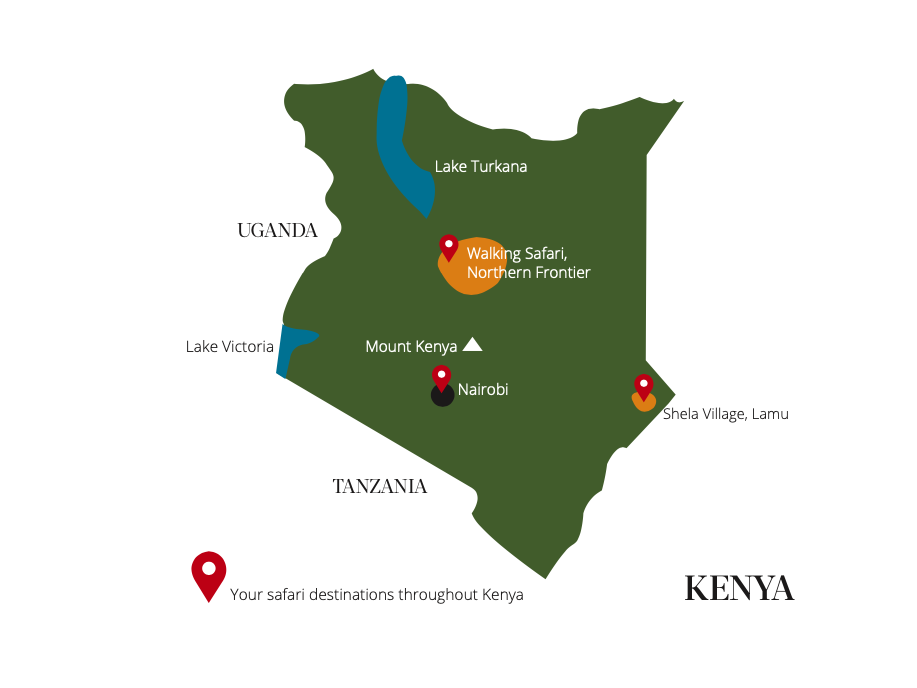
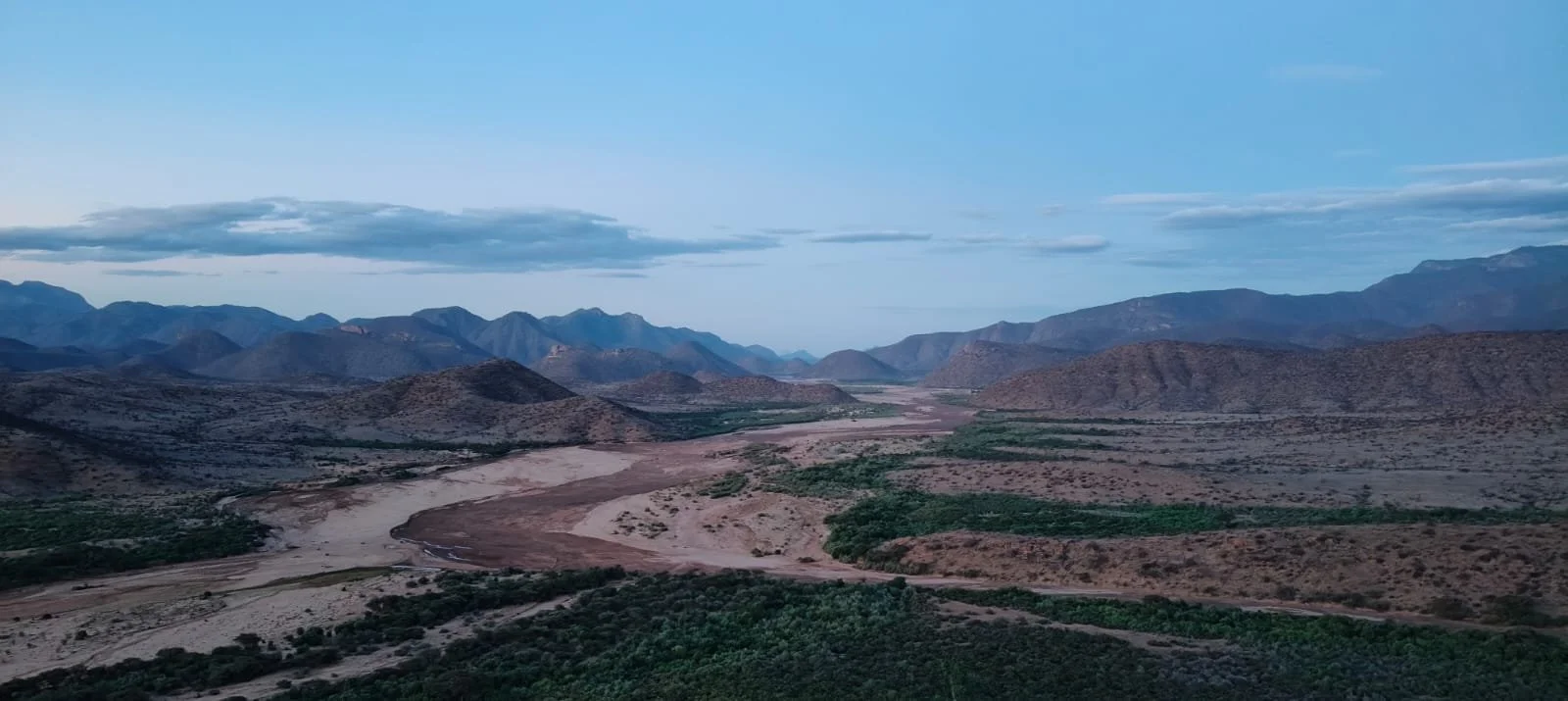
Northern Kenya is unlike anywhere else on the continent. Ancient metamorphic mountains, volcanic landscapes and the dramatic geography of the Rift Valley give way to a vast sweep of arid plains, seasonal riverbeds and remote lakes. It is a landscape that feels immense, where distances are measured less in kilometres than in horizons.
The Ndoto and Matthews ranges rise from the desert like islands. The Milgis Lugga cuts its winding course through dry country. Far to the north, Lake Turkana sits at the edge of the known world. Across this region, Samburu, Turkana and Rendille communities continue long pastoral traditions, moving with the seasons and carrying a deep understanding of a land where water, weather and wildlife are intimately connected.
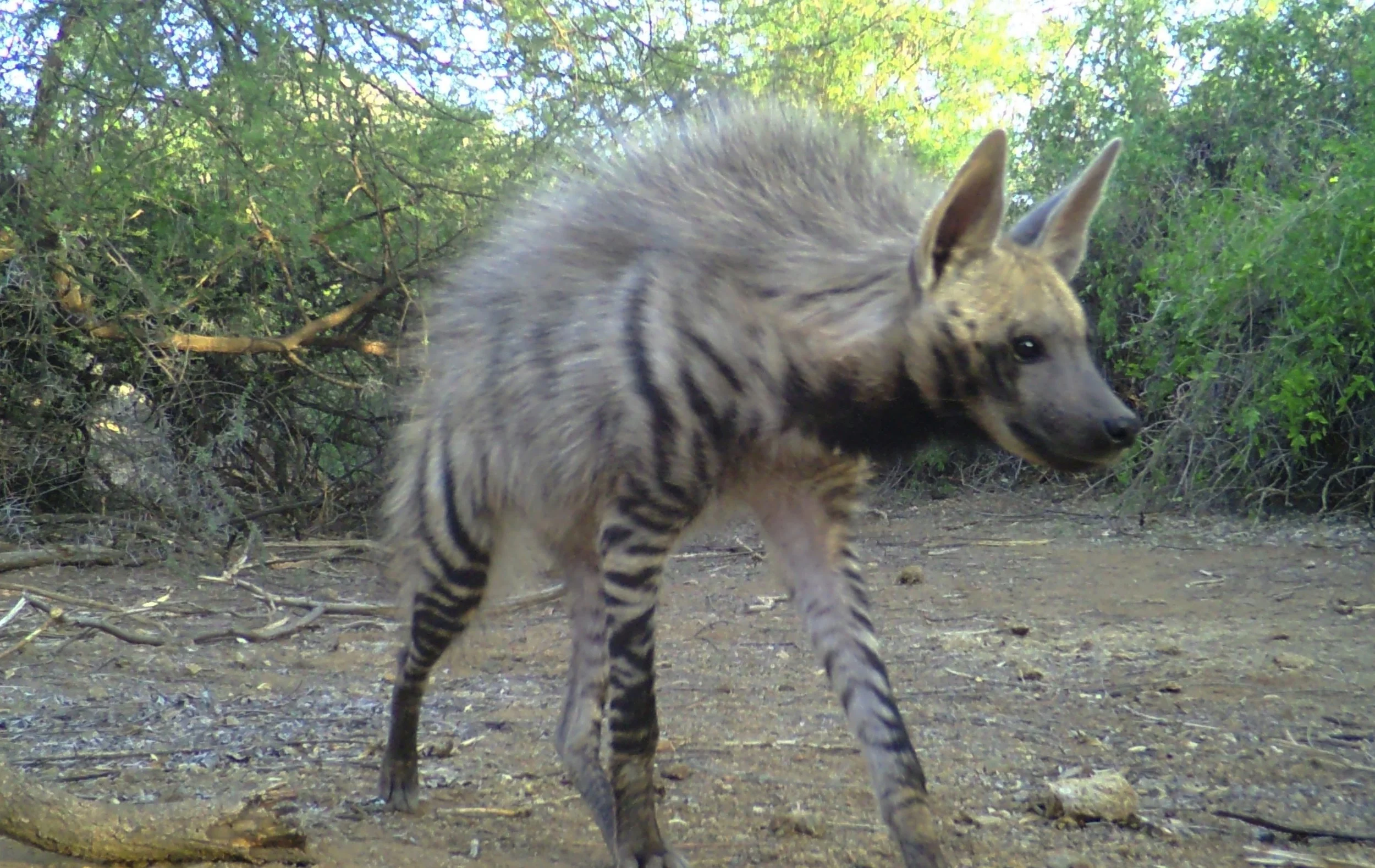
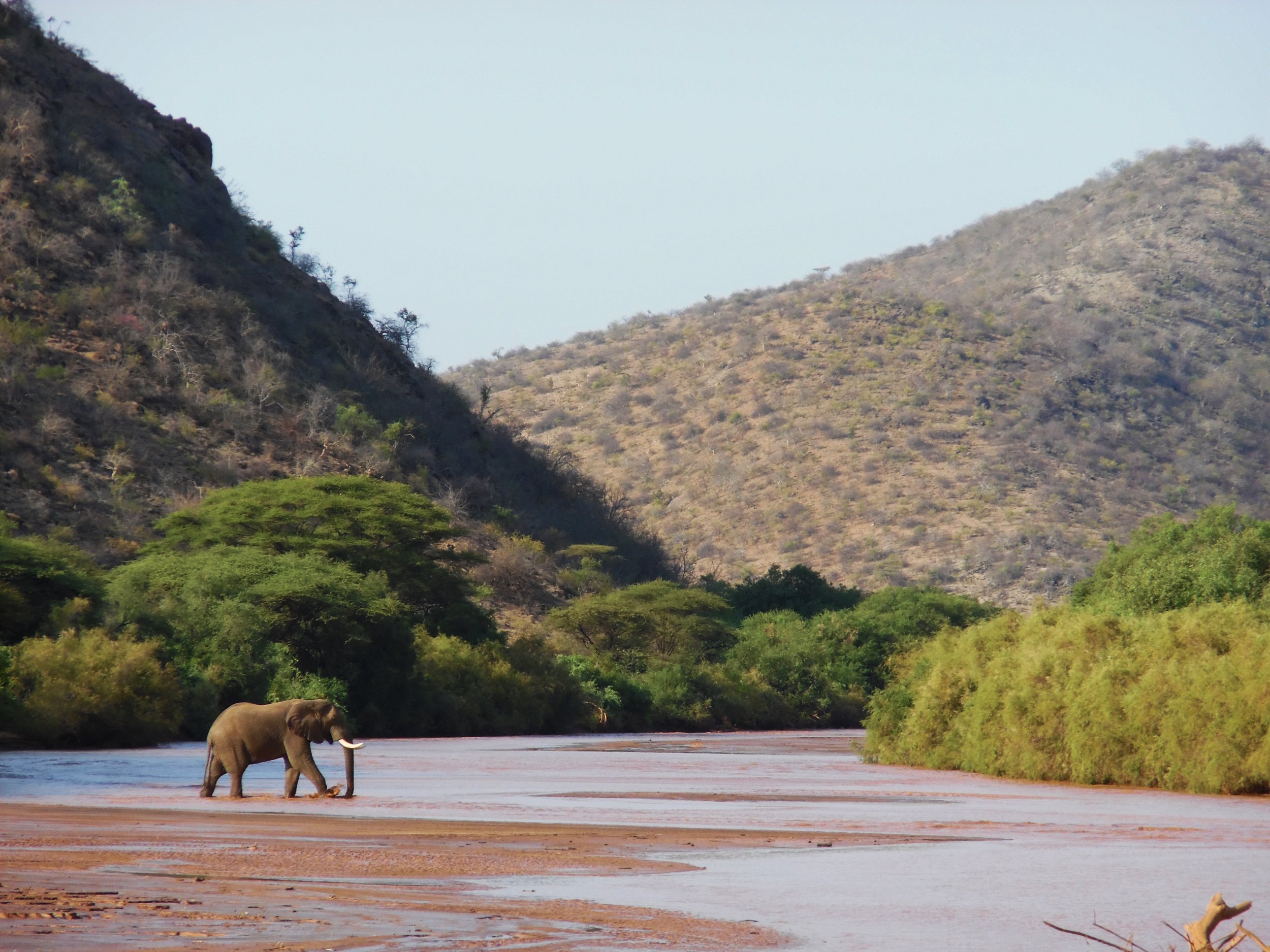
Wildlife moves through this country on its own terms. Elephant, giraffe, gerenuk and Grevy's zebra share ancient pathways with people and livestock, in landscapes that have remained largely untouched by mass tourism. To walk here is to experience a quieter, older rhythm of safari - one shaped by the country itself rather than the road.
The people who guide our safaris have spent their lives in this landscape. Their knowledge is not learnt from maps or guidebooks, but from years of walking these valleys, passes and riverbeds. It is that understanding, carried into every journey, that transforms a walk through northern Kenya into something far deeper than simply travelling from one place to another.
WALKING DAYS
How the days unfold.
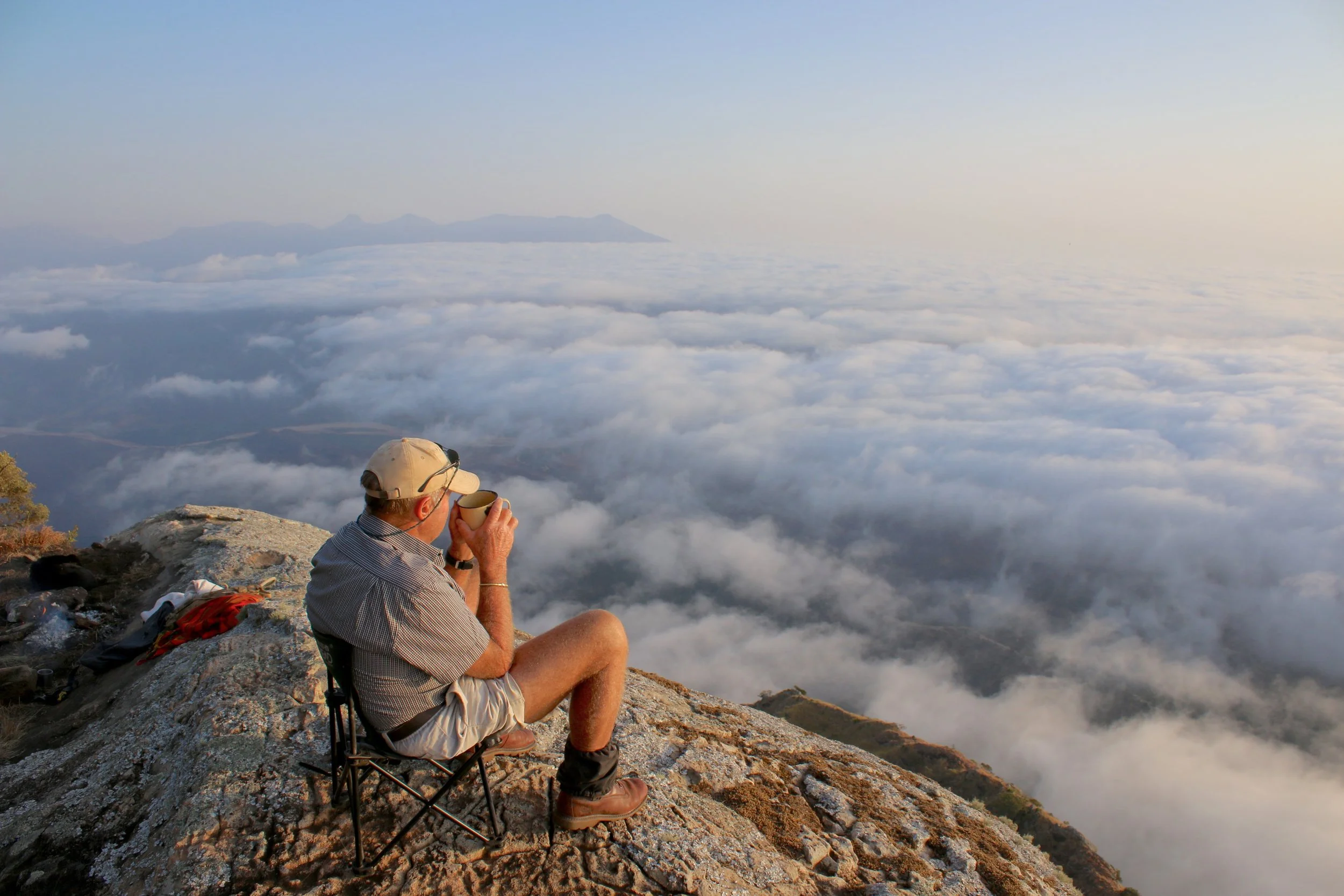
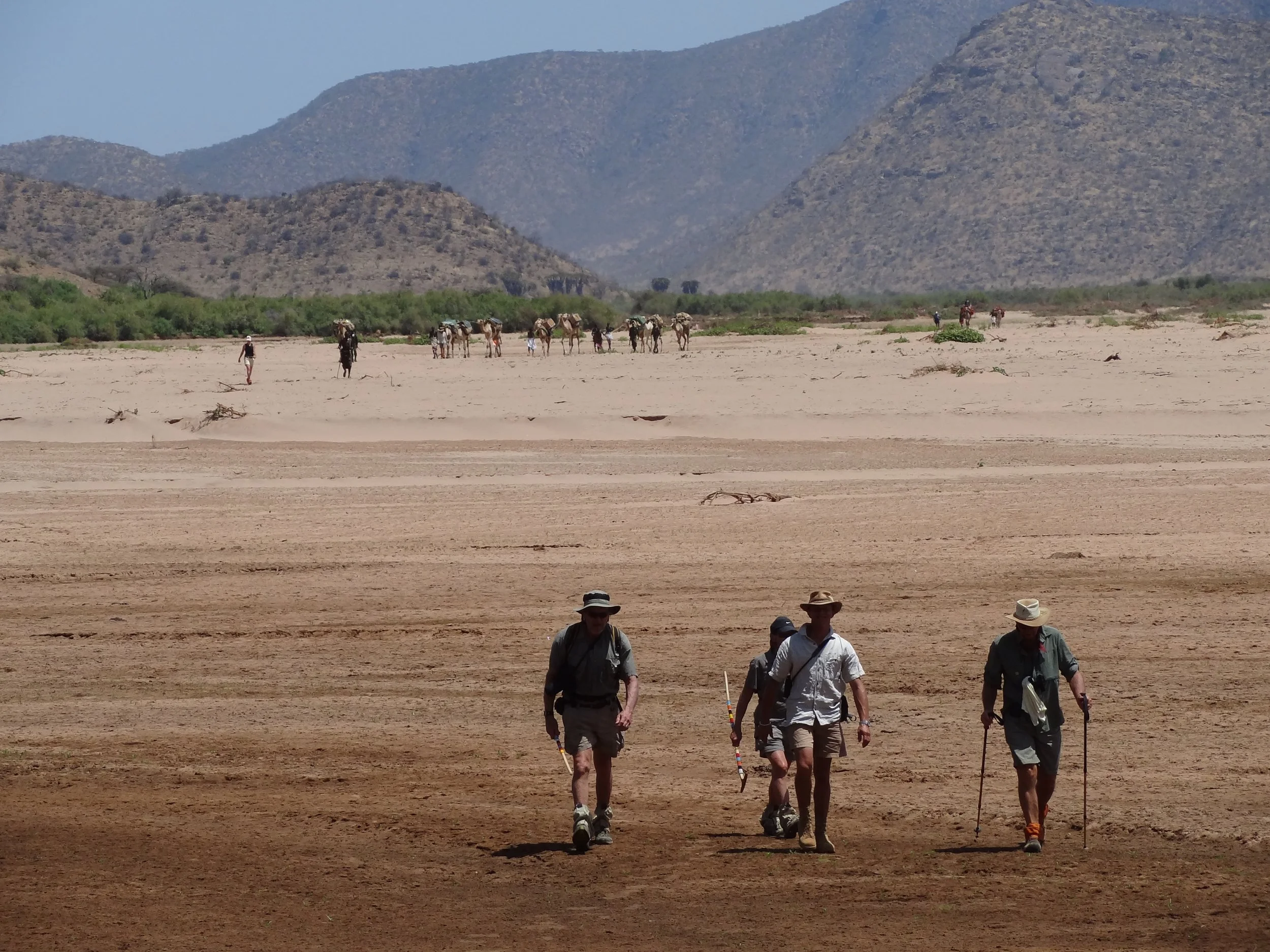
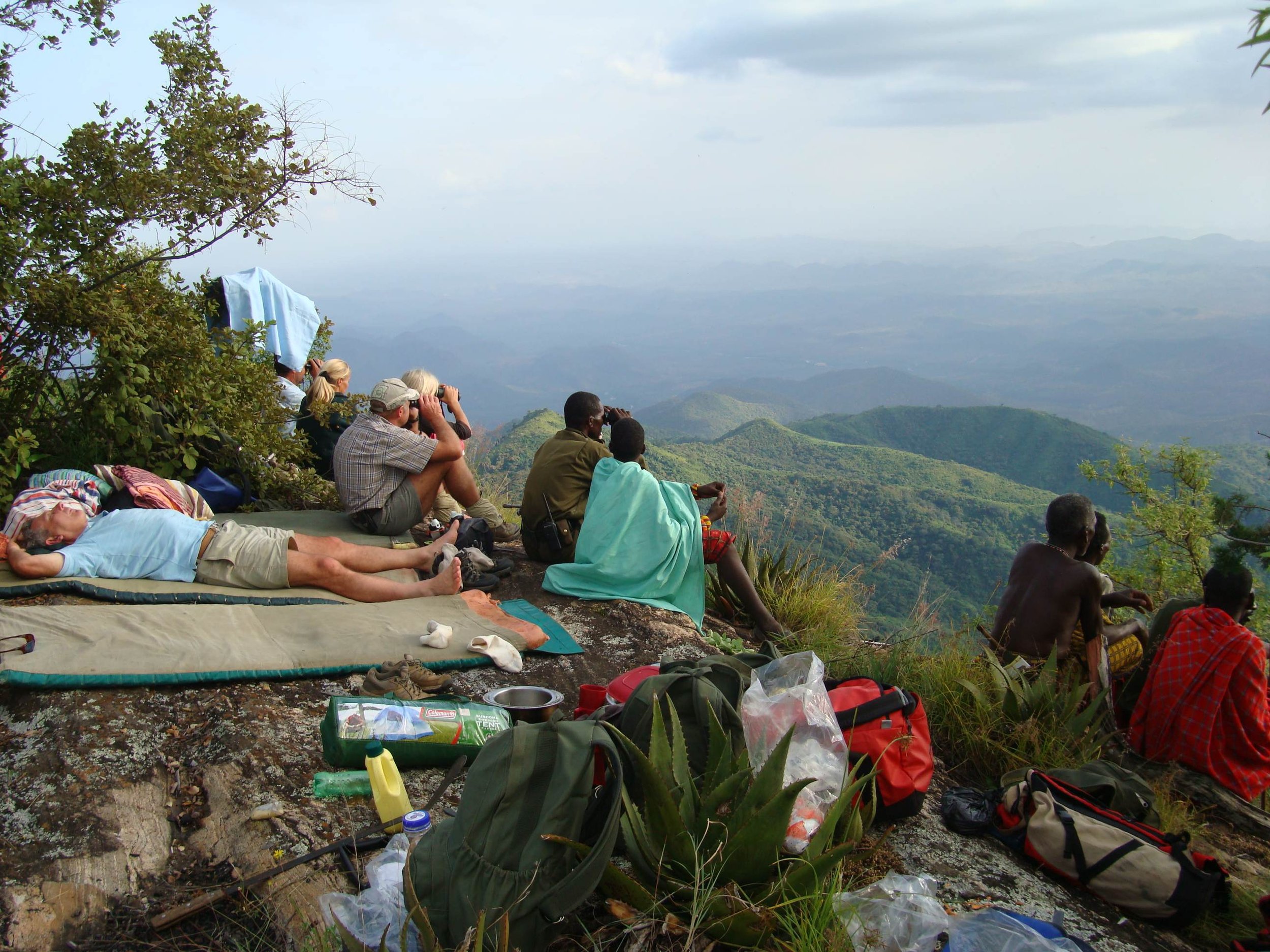
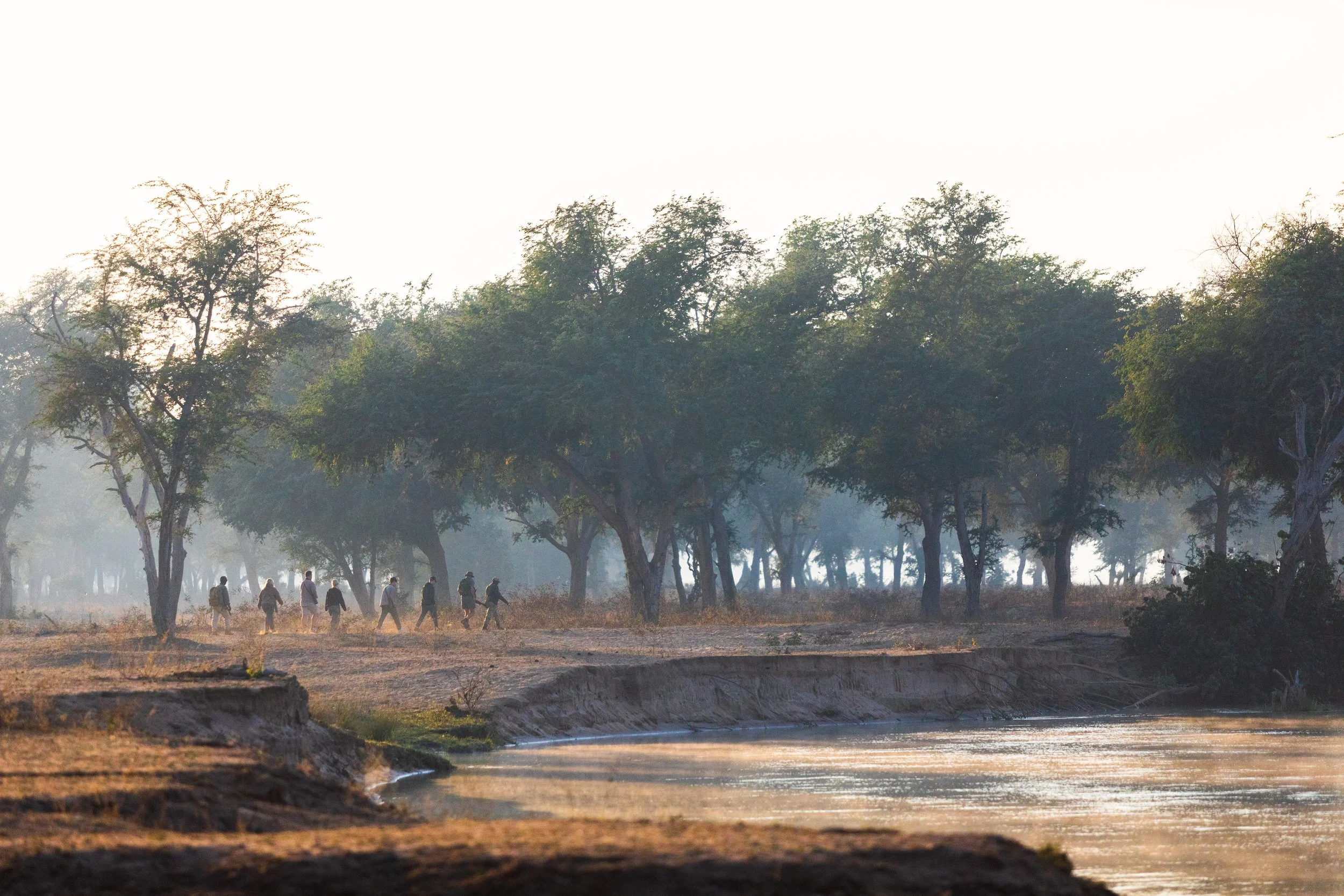
There is a rhythm to walking safari that quickly replaces the routines of everyday life. The day begins quietly, often with tea or coffee around the fire as first light reaches camp. As the air is still cool, you set off on foot with your guides, carrying only what you need for the day while the camel team and camp crew move ahead to the next campsite.
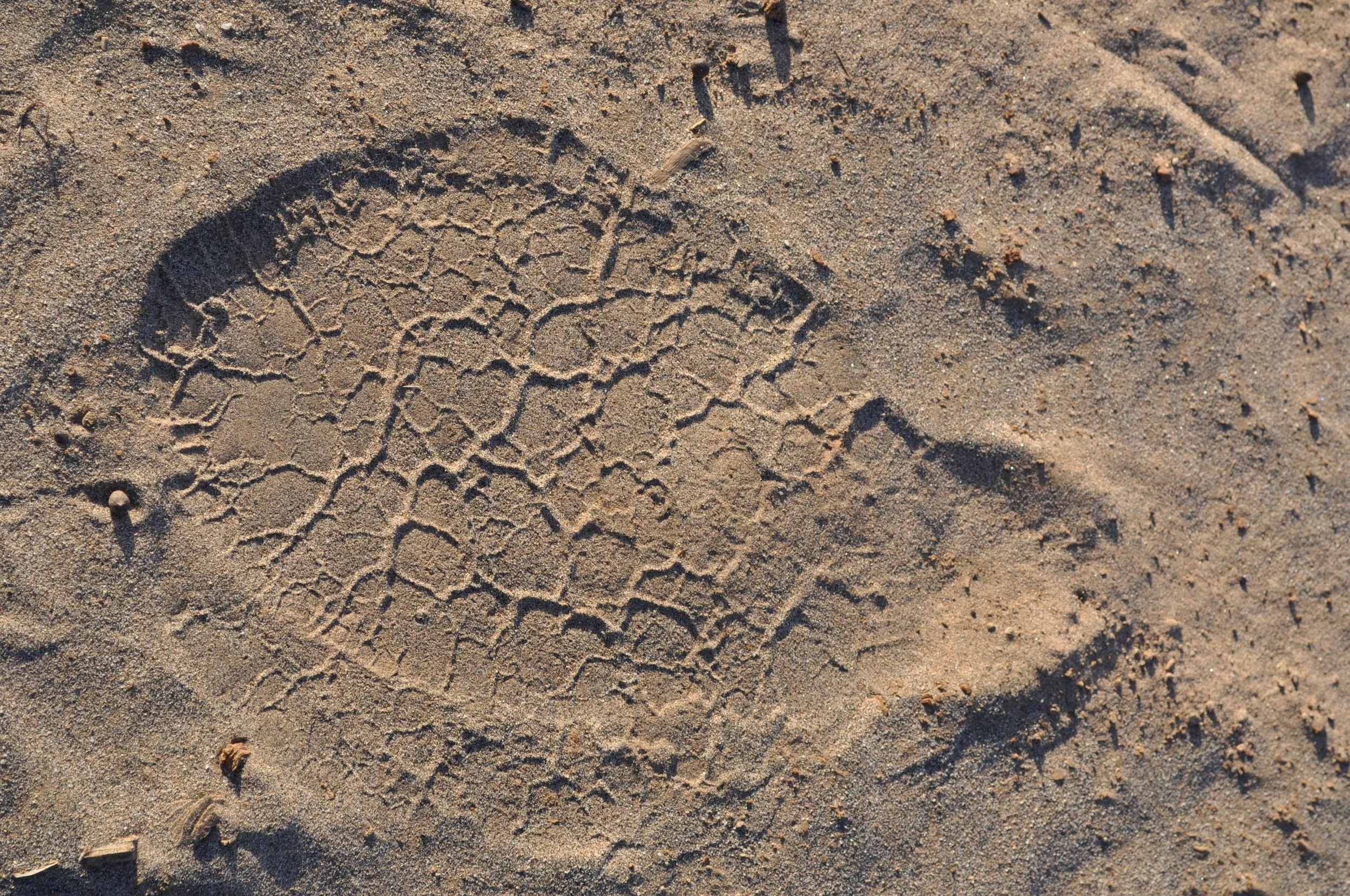
The pace is unhurried. Some days follow the winding course of a dry riverbed, others climb into the hills or cross open country where wildlife moves freely. There is time to stop for tracks left overnight, to watch elephants feeding through the acacias or simply to take in the silence of a landscape where there are no roads and few signs of the outside world.
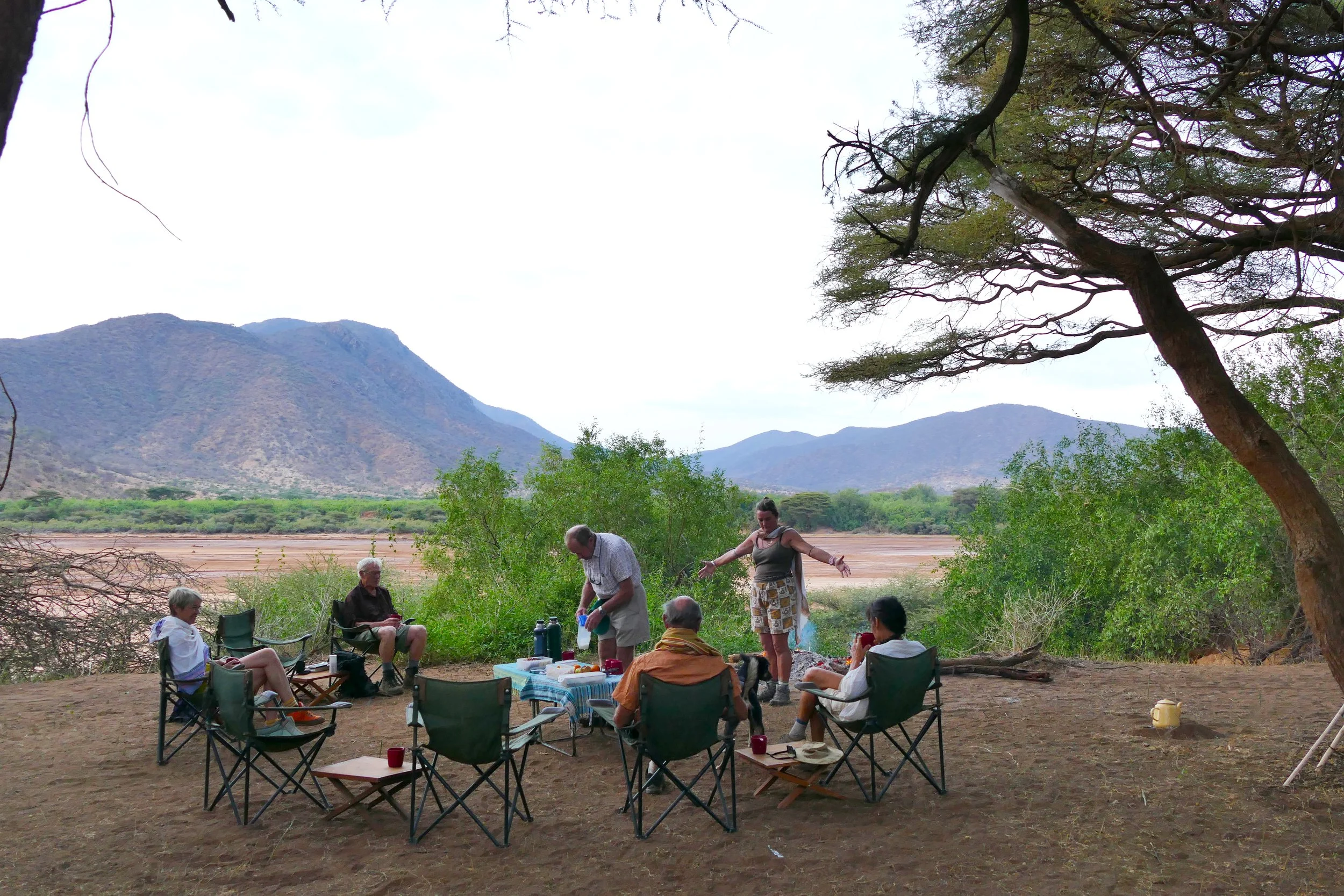
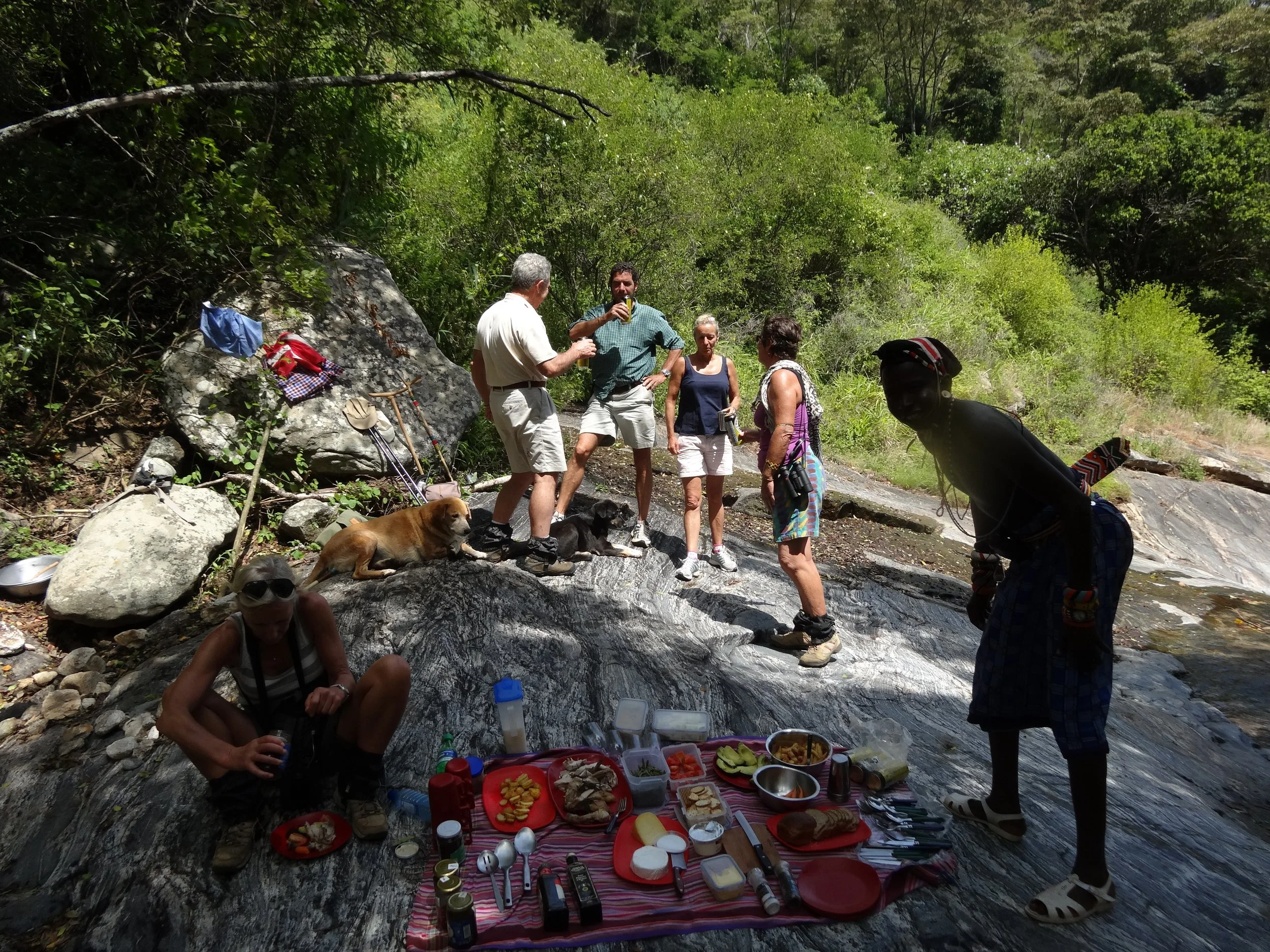
Breakfast or lunch is often enjoyed beneath the shade of a tree, and conversations tend to wander between wildlife, history and the stories that local guides have gathered from a lifetime spent in this country. Distances are never the focus. The experience lies in moving slowly enough to notice the details that are so often missed.
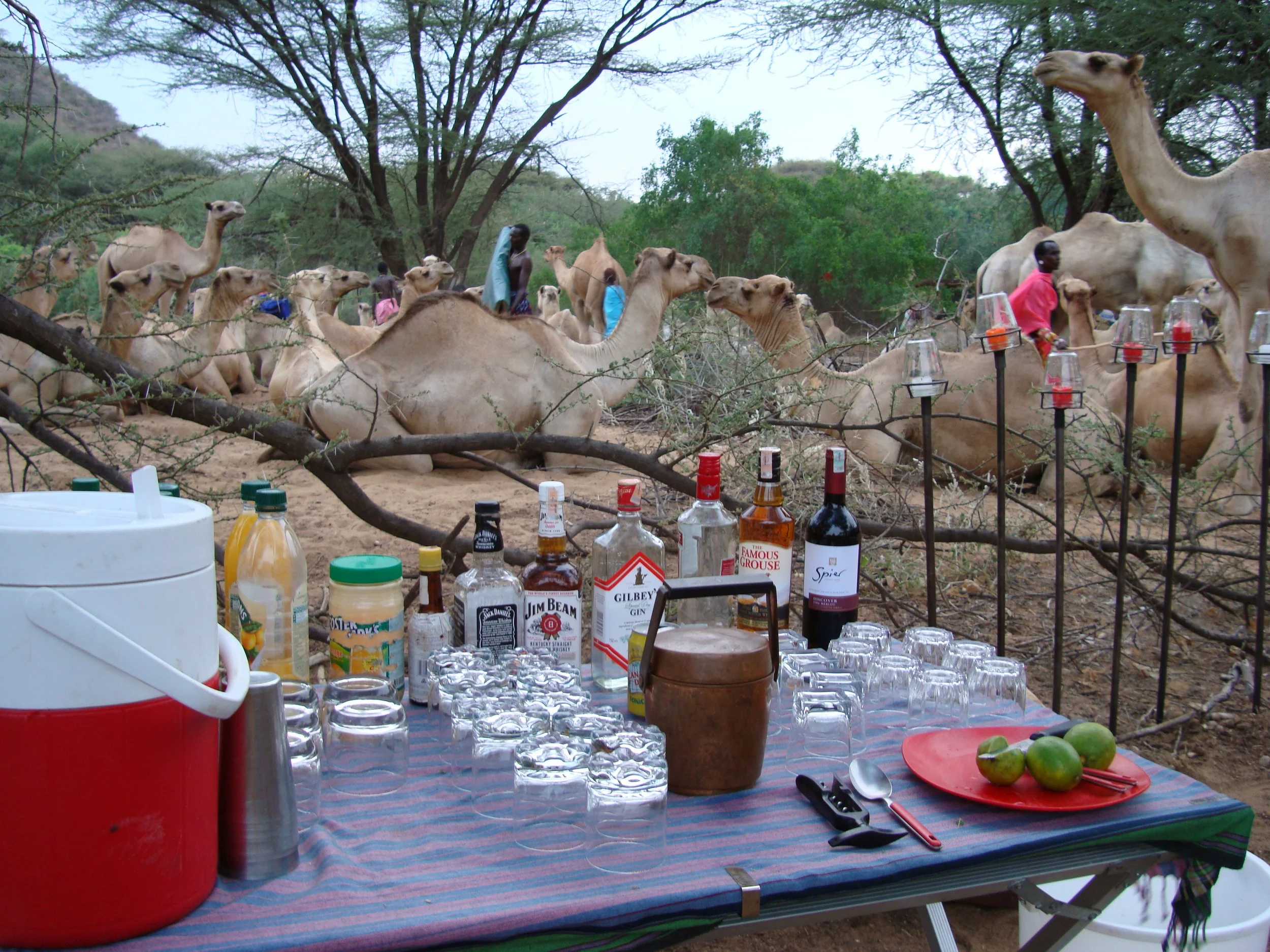
By early afternoon you arrive at camp to find everything already waiting. There is time to wash off the dust, settle into the quiet of the afternoon and watch the changing light before everyone gathers around the fire for drinks, dinner and another night beneath the stars.
No two safaris follow exactly the same path. The seasons, the wildlife and the interests of your group all shape the journey. What remains constant is the simple rhythm of walking, observing and allowing the landscape to reveal itself, one step at a time.
IN CAMP
Where the day settles.
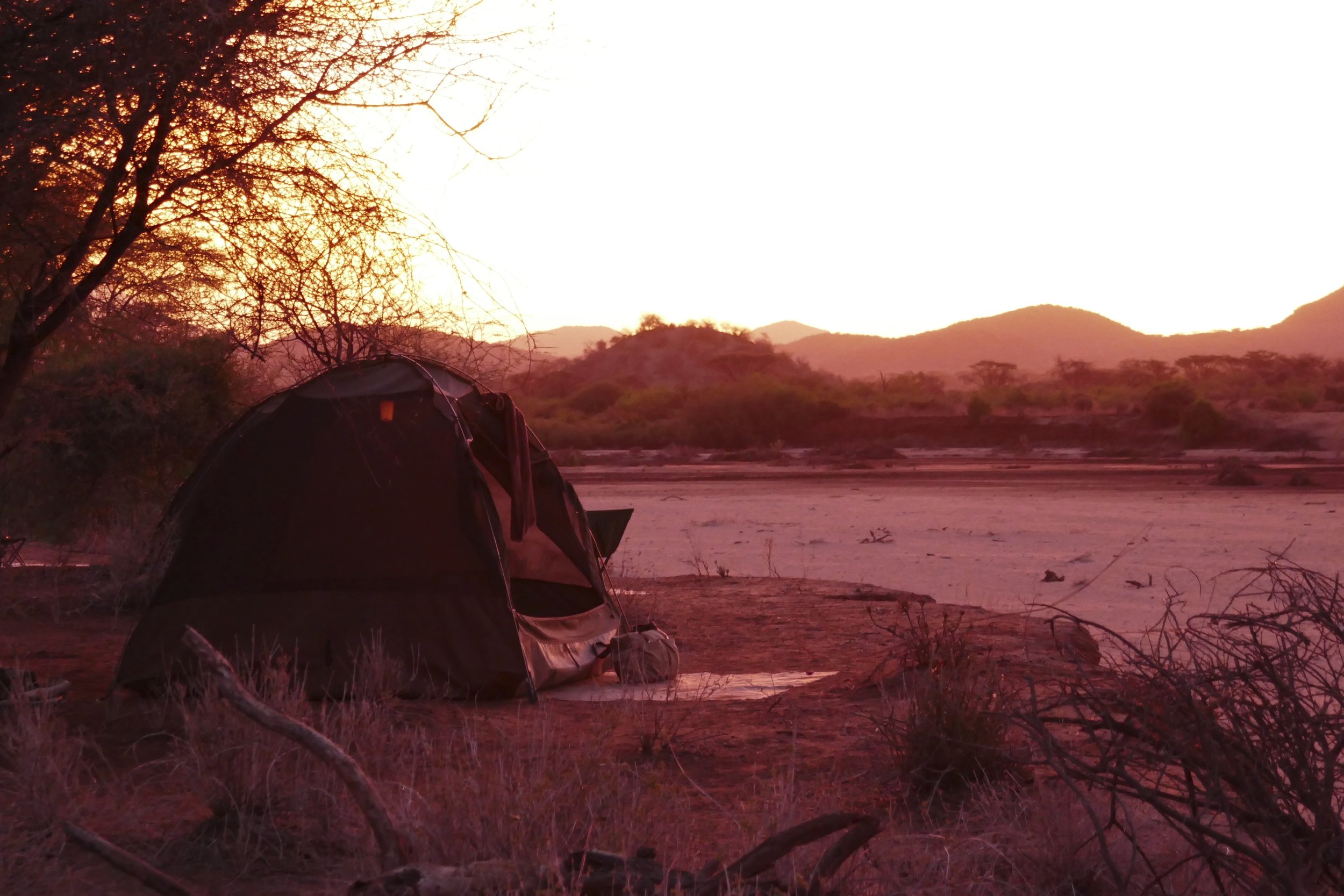
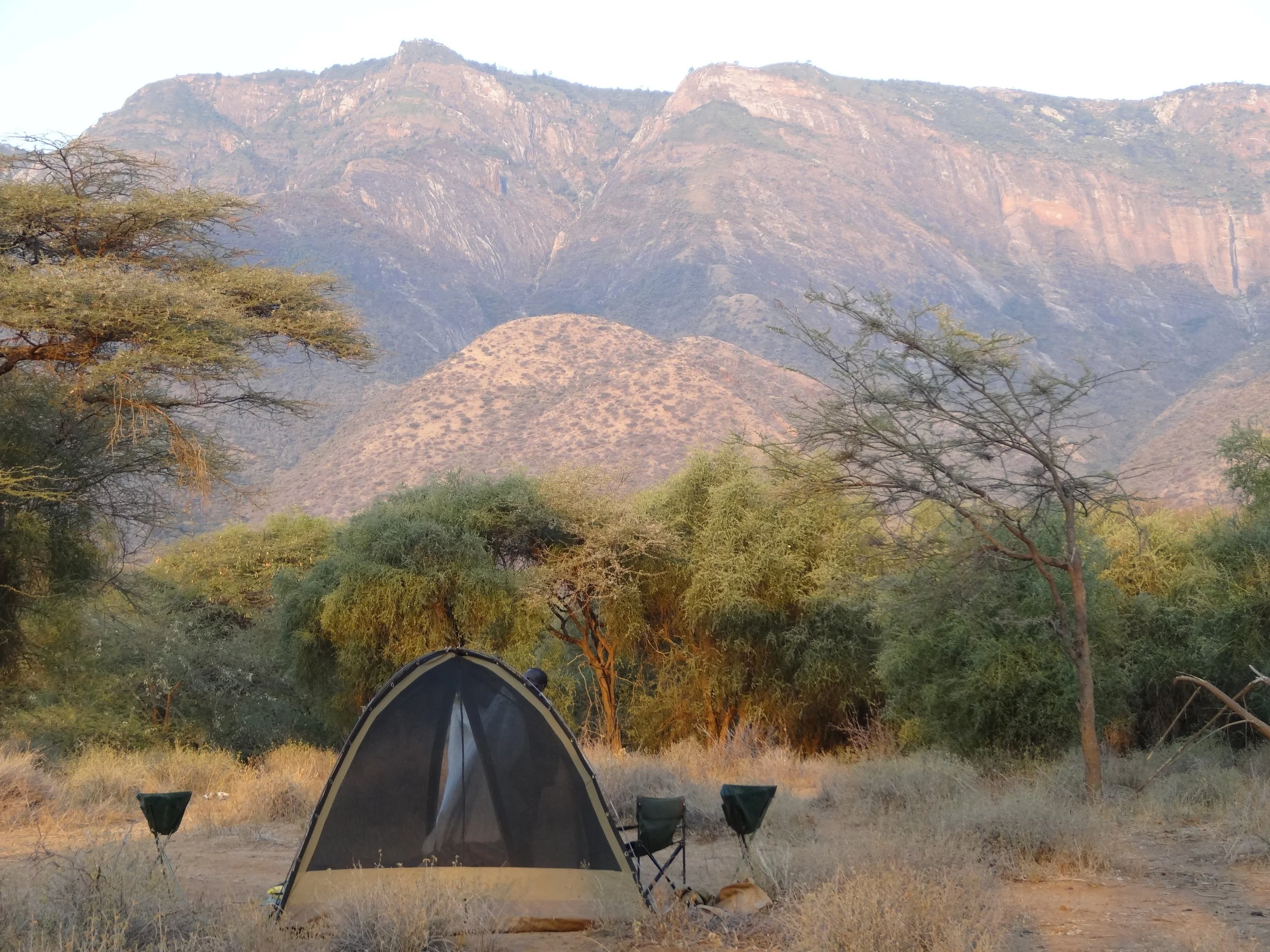
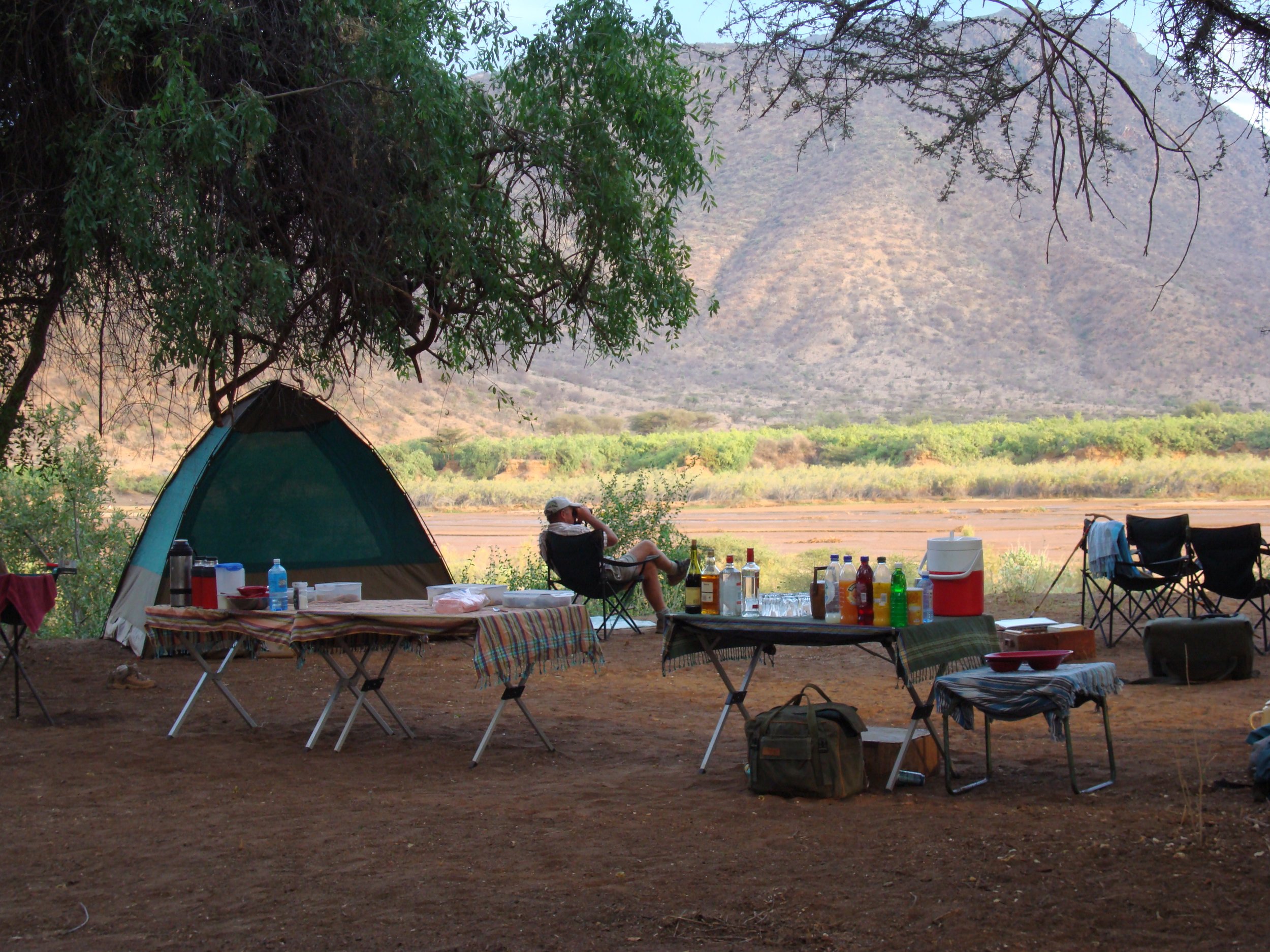
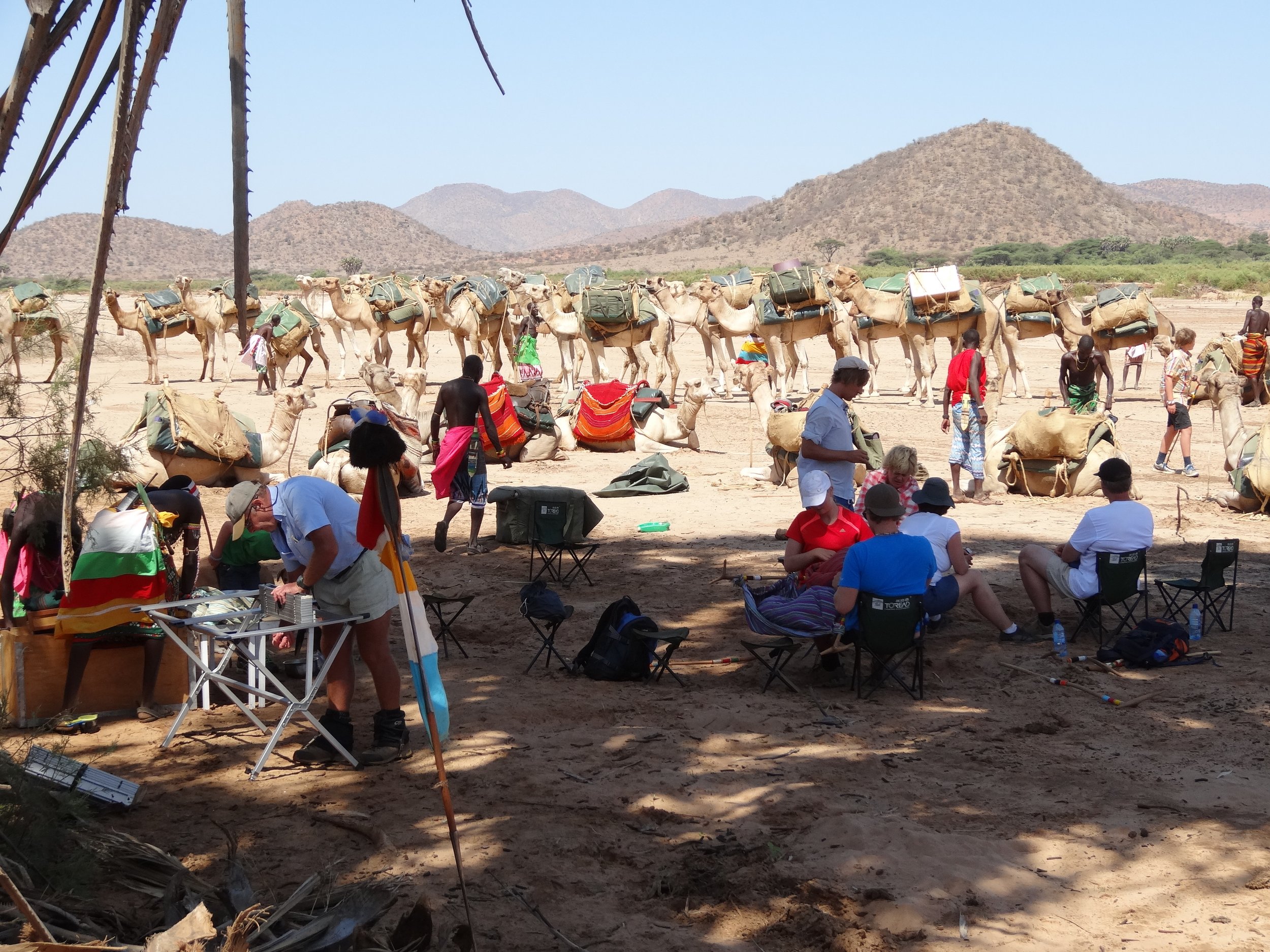
By the time you arrive, camp is already waiting. While you've spent the day on foot, carrying only what you need, the camel train and support crew have moved ahead, quietly dismantling one camp and creating another. Canvas tents stand beneath the trees, water is warming for a bucket shower and the smell of something cooking drifts from the fire.
There is no agenda once the walking is done. Some people wash off the dust and settle into a book. Others sit with a cup of tea and watch birds gathering in the late afternoon light, or wander down to a dry riverbed to take in the stillness. The pace of camp seems to belong to the landscape itself.
As evening falls, everyone gravitates towards the fire. Stories are shared, the day's discoveries replayed and dinner is served beneath an immense sky filled with stars. Without roads, reception or the distractions of everyday life, the world grows smaller in the best possible way - a circle of firelight, good company and the quiet satisfaction of having travelled through the country on its own terms.
There is a comfort to mobile camp that comes not from excess, but from simplicity. Everything you need is there, and nothing more. After a day spent walking through one of Africa's last great wild places, that feels like its own kind of luxury.

CONSERVATION
Milgis Trust.
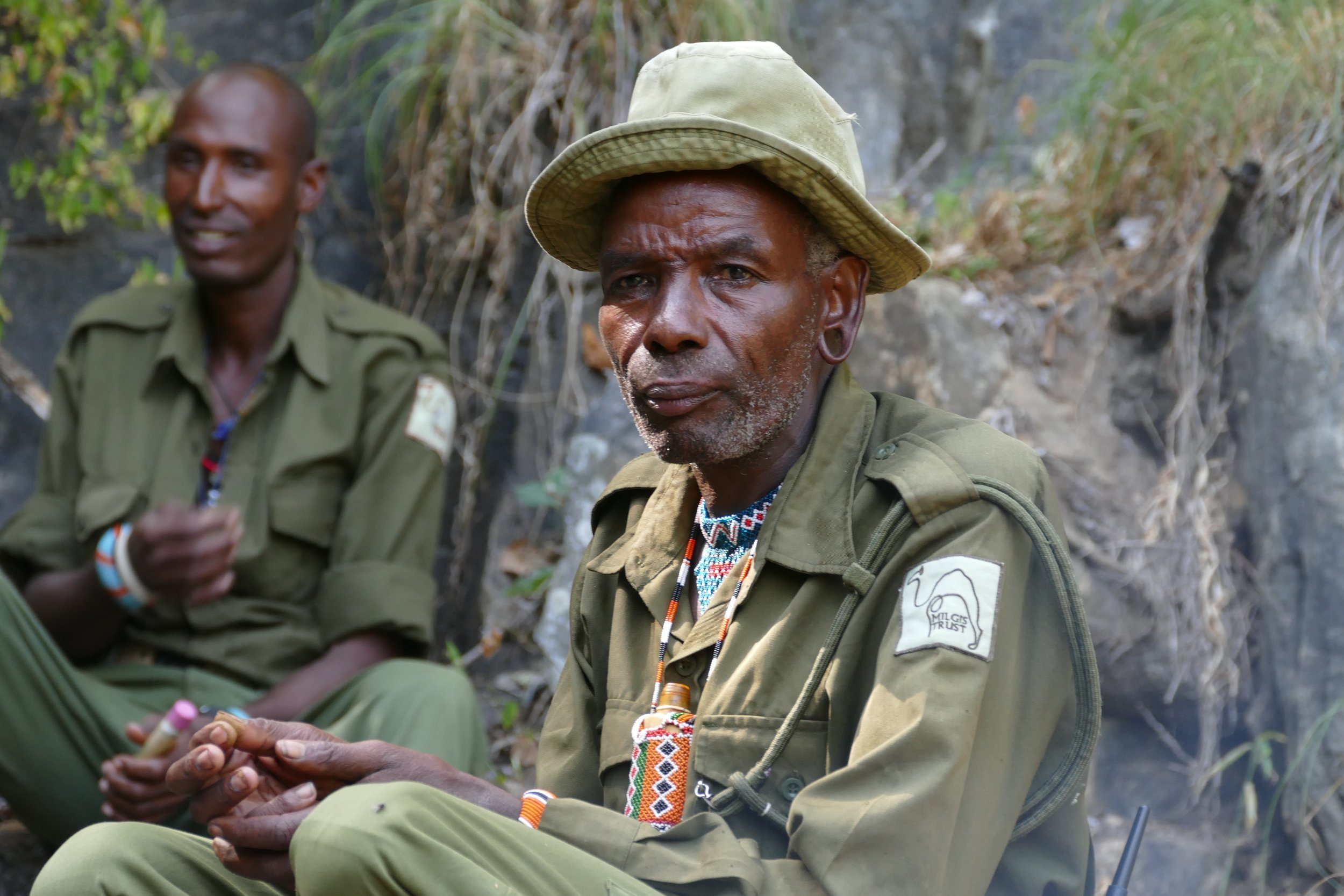
Some of Africa's wildest places have survived not because they have been fenced off, but because people and wildlife have learned to share them. The Milgis Trust exists to protect that delicate balance.
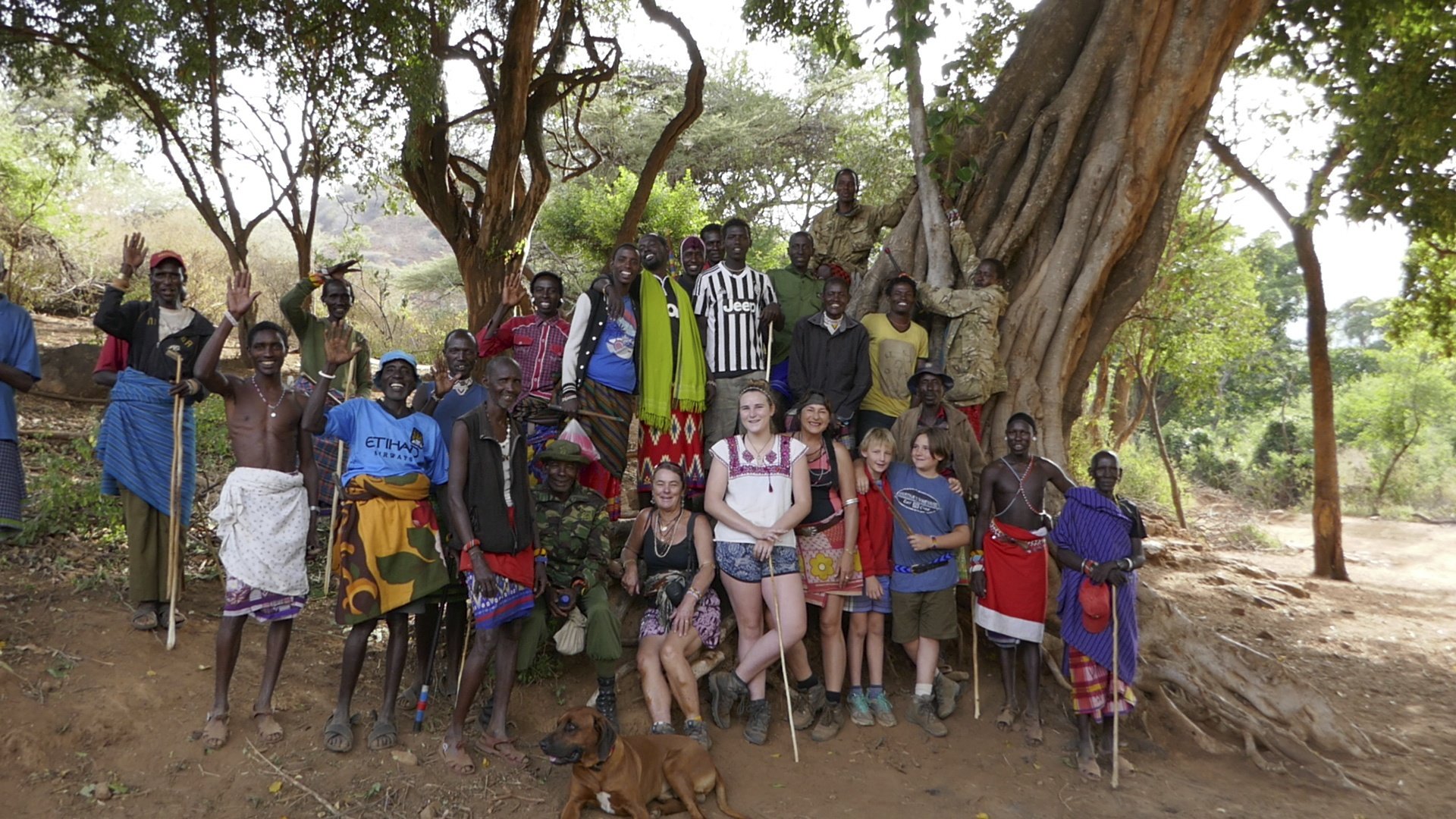
Working across the remote landscapes of northern Kenya, the Trust partners with the communities who have cared for this country for generations, supporting projects in education, healthcare, clean water and sustainable livelihoods while helping safeguard the wildlife and ecosystems that depend on them. Its work is grounded in a simple but powerful idea: when local communities thrive, wilderness has a future too.
The land you walk on is part of that story. Every walking safari passes through landscapes shaped and protected by the work of the Trust and the people who call this region home. By travelling here, you become part of a long-term commitment to preserving one of Africa's last great unfenced wildernesses - for the communities who have sustained it for generations, and for the wildlife that still moves freely across it.
FAQ’s
Everything you may want to know before setting out on a walking safari - from how things work in camp to what you can expect on foot in wild country, including both practical considerations and life in the bush. If something isn’t answered here, please reach out. No question is too small.
-
A walking safari is exactly what it sounds like: exploring the African wilderness on foot, accompanied by highly experienced guides and trackers. But in reality, it's something much deeper than that. It is a different way of experiencing the wild.
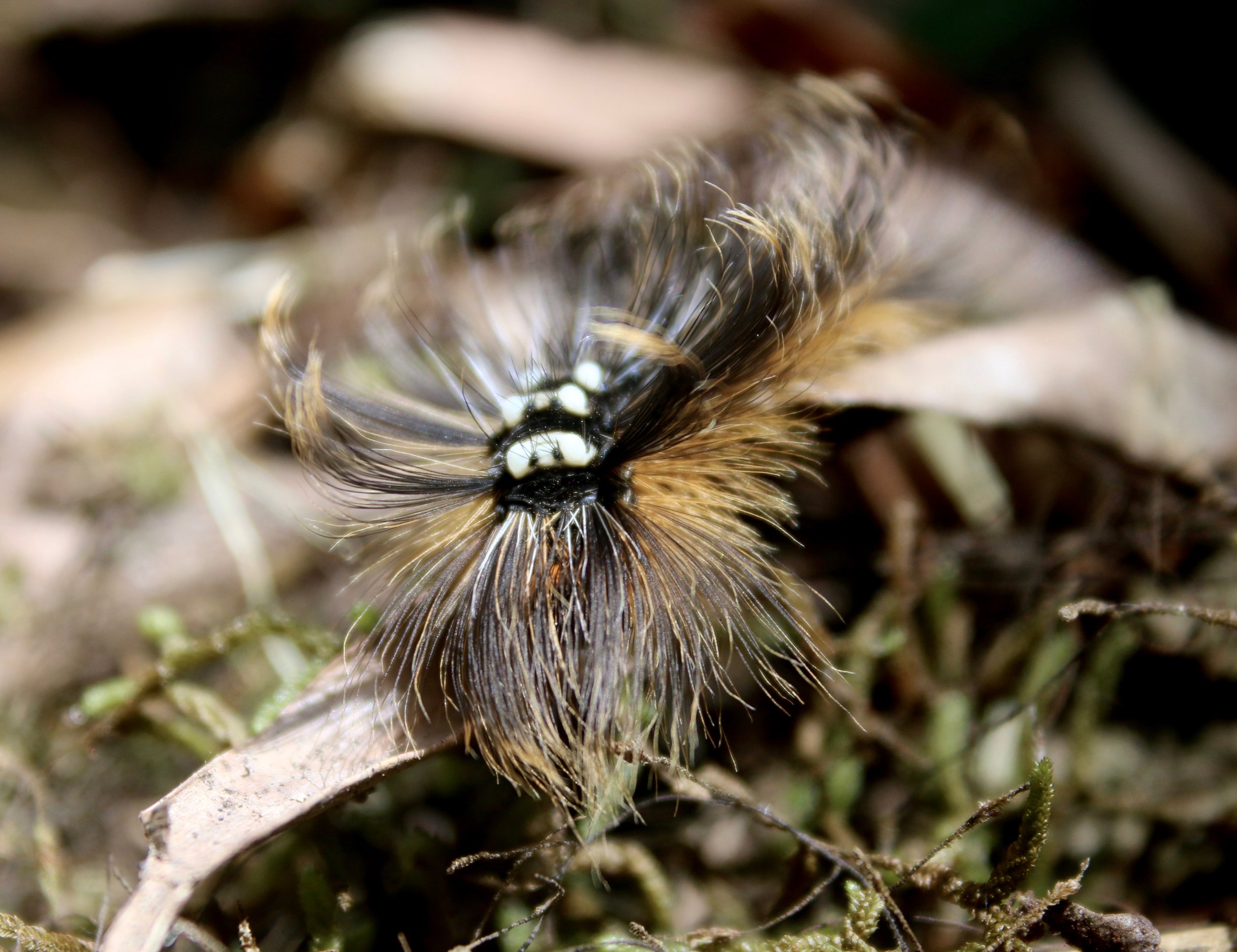
Without the frame of a vehicle, the landscape comes alive. You begin to notice the details - the tracks in the dust, the scent of wild sage after rain, the alarm call of a distant antelope, the intricate patterns of insects, birds and ancient trees. The pace slows, your senses sharpen, and you become part of the environment rather than simply observing it.
While encounters with elephants, giraffes and other wildlife are often unforgettable moments, walking safaris are about far more than ticking animals off a list. They offer an opportunity to understand the interconnectedness of the ecosystem through tracking, storytelling and the deep knowledge of the guides who have spent a lifetime reading the land.
A walking safari is not simply a safari without a vehicle. It is a quieter, more immersive and more personal way to experience Africa, one that stays with you long after the journey is over.
-
Yes, walking safaris offer frequent and memorable wildlife encounters, including large mammals, as well as a rich variety of birdlife and reptiles. Experiencing wildlife on foot brings a completely different perspective: it allows you to notice the smaller details of the landscape, track signs and movement, and appreciate the scale of the animals and environment around you.
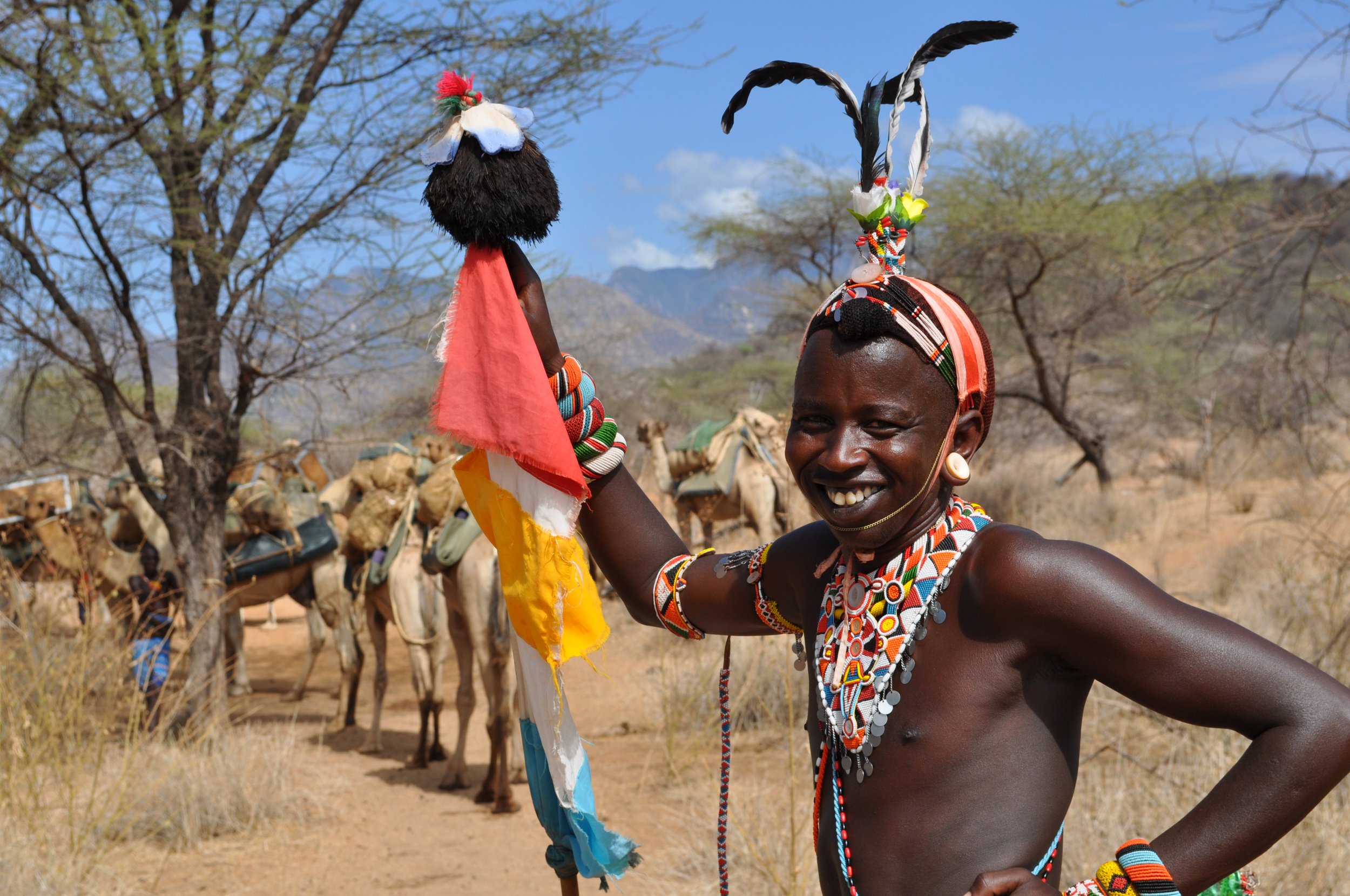
Our walking safaris take place in wild, remote country where wildlife is often present and moving through the same landscapes you are exploring. Each walk is guided by experienced local guides and trackers from the Samburu communities, who have an intimate understanding of animal behaviour and the land.
Alongside wildlife, guests also gain insight into the region’s living culture, with opportunities to learn about local traditions and community life, particularly on market days when people gather in their full traditional dress.
-
Every North Node walking safari is led by guides with years of experience in the bush - people who understand animal behaviour, read the ground constantly, and make decisions about pace and route based on what is actually in front of them. Groups are kept small. Your guides have done this many times. You are in good hands.
-
There is no single best time to go on a walking safari, only the best time for the experience you're looking for. Different landscapes reveal themselves in different seasons, from wildlife-rich dry months to the lush abundance of the green season.
Whether you're hoping to track wildlife, enjoy cooler walking conditions or experience a particular destination at its finest, we'll help guide you towards the right journey at the right time of year.
-
Our walking safaris are intentionally small and personal. Most departures cater for a minimum of two guests and a maximum of fourteen, allowing for a more intimate experience and ensuring everyone can benefit from the knowledge and expertise of the guides.
Travelling in a small group also means moving quietly through the landscape, with greater flexibility to follow wildlife, pause for moments of discovery and enjoy the sense of immersion that makes walking safaris so special. Private walking safaris for couples, families and groups of friends can also be arranged.
-
Most days we walk between 8 and 15 kilometres, although the exact distance will depend on the terrain, the wildlife we encounter and the pace that feels right for the group. Walking safaris are not about covering as much ground as possible, they're about taking the time to experience the landscape.
We usually set off in the cool of the early morning, typically between 6 and 7am, and walk for around four to five hours, including regular stops to watch wildlife, learn about the environment and enjoy refreshments along the way. The aim is to arrive at the next camp before the heat of the day, with plenty of time to relax and enjoy your surroundings.
-
You don't need to be an athlete to enjoy a walking safari. Our journeys are designed for all levels of fitness and are more about curiosity than endurance. We walk at a relaxed pace, with plenty of opportunities to stop and explore the wildlife, tracks, plants and stories that make these landscapes so special.
Most guests who enjoy regular walks will feel very comfortable, and we can always tailor the pace and itinerary to suit the group. The goal isn't to cover as much ground as possible - it's to experience Africa in a deeper, more connected way.
-
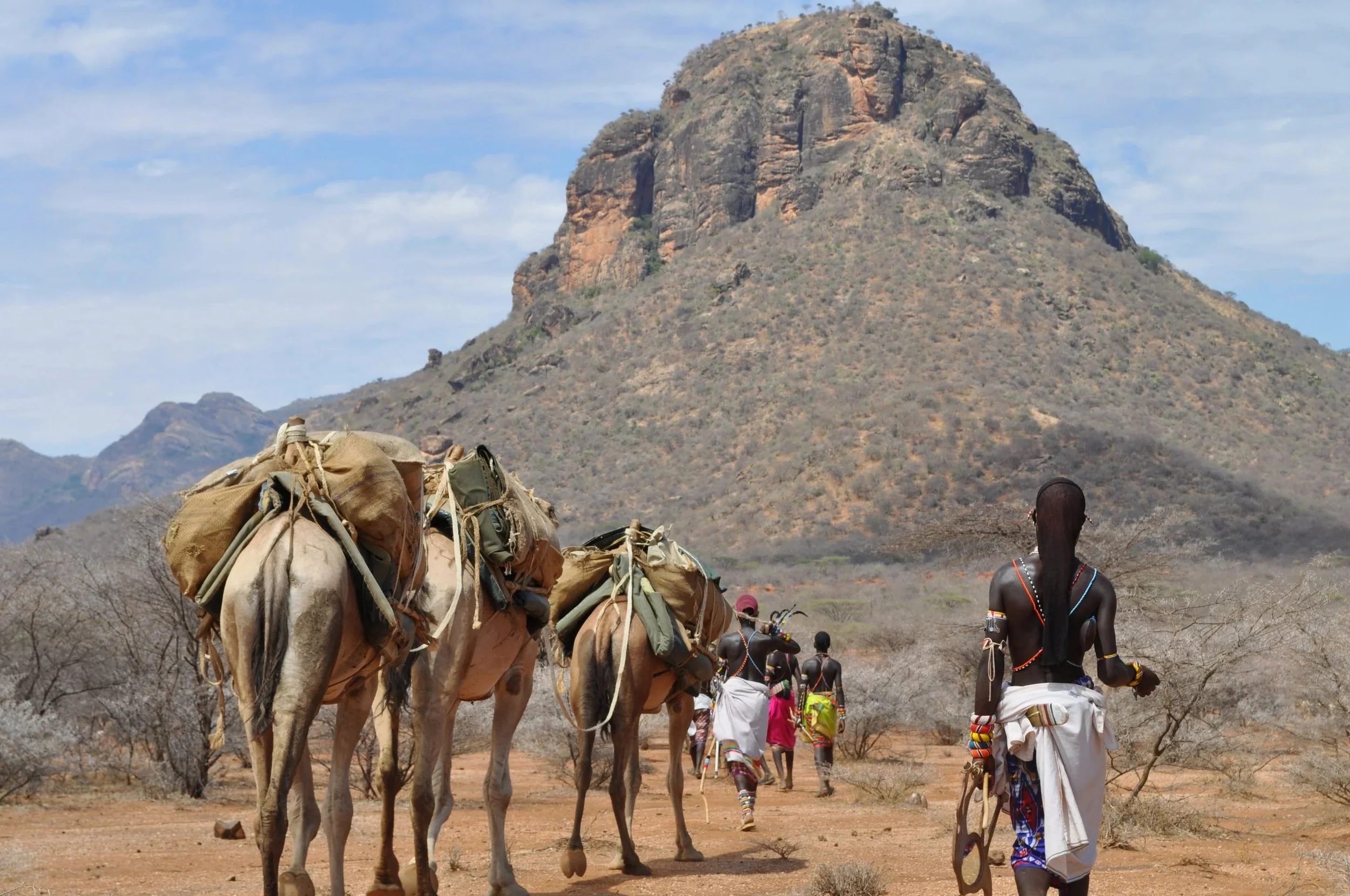
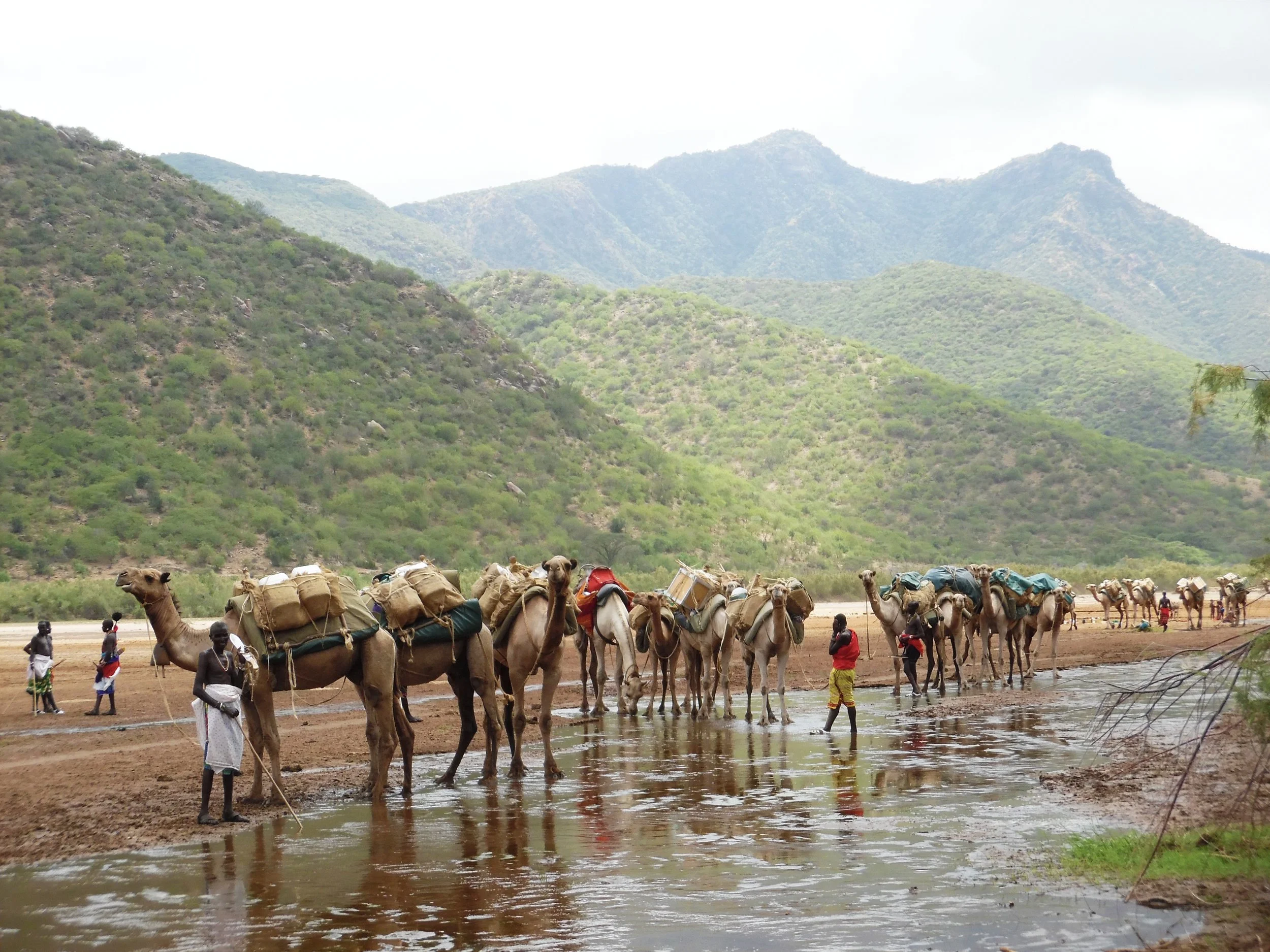
No, the only thing you'll need to carry is a small daypack. As you walk, our camel train and experienced Samburu team move the entire camp to the next destination, often travelling through landscapes that vehicles simply cannot access.
By the time you arrive, camp is ready and waiting, allowing you to enjoy the rhythm of a traditional mobile safari without the logistics. With up to 20 camels and a dedicated local crew supporting each journey, the movement of camp becomes part of the experience itself - a quiet procession across some of Africa's last great unfenced wildernesses.
On the rare occasion that two nights are spent in an area without water, we may arrange a simple water drop to support the camp. Otherwise, everything moves together, just as it has for generations.
-
On mobile walking safaris, toilet facilities are typically eco-friendly composting systems rather than flush toilets. They are well-maintained, private, and designed to be comfortable even for travellers who prefer more conventional amenities. Hot showers are available at camp and are heated using firewood, with water delivered via a bucket or gravity-fed shower system. It’s a simple, off-grid setup but one that works smoothly and is part of the authentic wilderness experience.
-
The golden rules: neutral colours, layers, soft bags only and less than you think you need. Leave behind anything with wheels, anything white, anything you would be upset to lose to dust or a campfire ember. A good headlamp, broken-in walking shoes and a warm layer for early mornings and evenings will serve you better than anything else. The full North Node packing list - specific to your destination and the time of year - is waiting for you the moment you book.
-
Yes—children are welcome on walking safaris, and we can tailor the experience to suit families. Younger children, from around 7 years old, are able to join shorter, gentler walks designed to match their pace, attention span, and comfort in the bush. Routes and timing are adjusted by your guides to ensure the experience remains safe, engaging, and enjoyable for all ages.
YOUR WALKING SAFARI STARTS HERE
Kenya. Zambia. Tanzania.
Tell us where you’d like to walk. We'll know exactly what to do with it.